



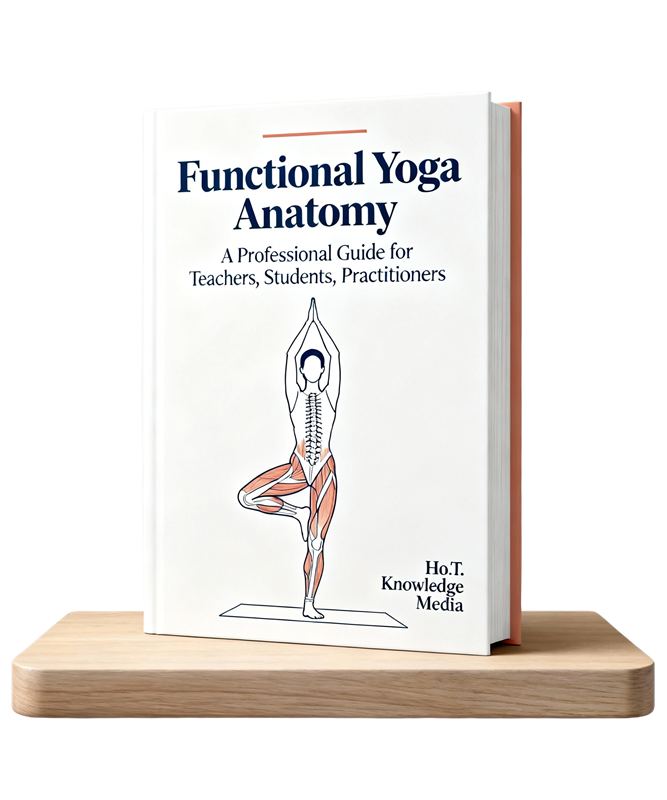
Functional Yoga Anatomy A Professional Guide for Teachers, Students, and Practitioners
Price range: $1.00 through $5.99
Understand the muscles and joints behind your yoga poses. A clear, practical yoga anatomy guide for safer alignment, stronger movement, and better results—ideal for practitioners and teachers.
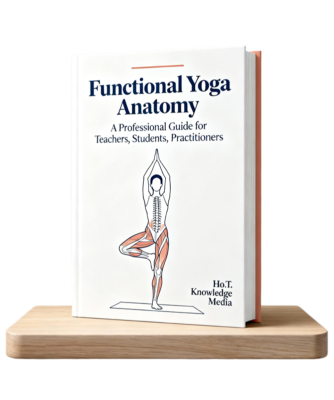
Unlock the Power of Functional Yoga Anatomy
Yoga is more than a spiritual practice—it’s a global movement discipline that transforms lives effortlessly. Yet beneath the flowing sequences and challenging poses lies the science of functional anatomy. This guide bridges the gap, transforming your yoga experience by helping you understand how your body sustains and transitions through every movement.
Traditional yoga instruction often highlights pose names without digging into the mechanics underneath. Phrases like “engage your core” or “ground through your feet” become ambiguous when students fail to learn what muscles activate, which joints operate, and how forces distribute through their body. Functional anatomy eliminates these ambiguities, enriching your practice and safeguarding your journey against injuries and plateaus.
Transform Your Practice With Anatomical Insights
Functional anatomy empowers every movement with deeper understanding. Imagine mastering hip flexion in Warrior I through coordinated actions of the iliopsoas, rectus femoris, and tensor fasciae latae. Gain clarity in Downward Dog by recognizing the role of your rotator cuff muscles in balancing gravity and body weight. This knowledge enhances control and fosters sustainable strength that protects your body from harm.
Beyond injury prevention, anatomical awareness gives you tools to distinguish productive discomfort from harmful pain. Learning about fascia’s unique responses to sustained or dynamic stretching enables goal-oriented techniques. Realizing that joint mobility naturally varies between individuals liberates you from comparisons, allowing you to focus on functional movement unique to your body.
Personalize Your Practice With Scientific Insights
Thanks to modern research, our understanding of yoga’s benefits continues to expand. Discover how nervous system adaptations contribute to flexibility improvements or how progressive overload boosts strength development, even with bodyweight exercises. Learn how balance in yoga develops through the interconnectedness of visual, vestibular, and proprioceptive systems—revolutionizing how we teach and practice yoga.
Functional anatomy recognizes the uniqueness of each body. Skeletal variations, such as hip socket depth, femoral neck angles, or spinal curve differences, mean that every body achieves poses and movements differently. Embrace this understanding, and shift away from impossible comparisons towards optimizing functional movement quality tailored for you.
This professional guide to functional yoga anatomy is an essential resource for teachers, students, and practitioners alike. Whether you’re seeking injury prevention, enhanced performance, or an enlightened approach to personal practice, this knowledge will elevate your yoga journey and unlock deeper connection with your body.
| E-Book | Lifetime access, Rent 24 days |
|---|
1 review for Functional Yoga Anatomy A Professional Guide for Teachers, Students, and Practitioners
Add a review
You must be logged in to post a review.
Related products




Zelbook –
Functional Yoga Anatomy is a practical guide that explains what’s happening inside your body during common yoga poses—so you can move with better control, safer alignment, and smarter progression. Learn how muscles, joints, and fascia work together through transitions and holds, helping you refine technique, prevent injuries, and improve strength and mobility over time.