


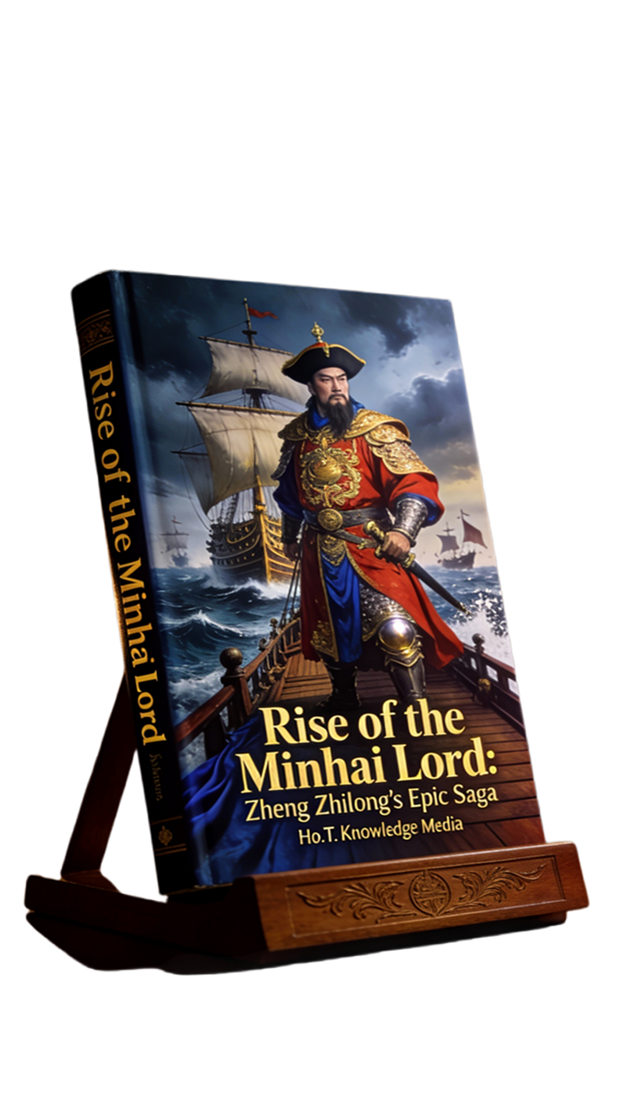
Rise of the Minhai Lord: Zheng Zhilong’s Epic Saga
Price range: $1.00 through $15.00
Uncover the storm-tossed saga of Zheng Zhilong, from Fujian pirate to Ming admiral and kingmaker in the Ming-Qing clash. This gripping biography reveals naval battles, trade empires, and family legacy shaping China’s seas. Perfect for fans of epic Asian history and pirate legends.
The Legacy of China’s Greatest Maritime Power
Step into the captivating world of Zheng Zhilong, a figure who epitomized China’s dynamic maritime history during the Ming Dynasty. More than a tale of trade and exploration, his story unfolds as a saga of ambition, rebellion, and reinvention, with Zheng rising from humble beginnings to become both a feared pirate king and a celebrated imperial admiral. His journey from Fujian’s stormy shores to the Ming Dynasty’s highest ranks symbolizes China’s maritime frontier’s dramatic evolution in one of its most chaotic eras. Zheng Zhilong’s life stands as a testament to the thriving coastal provinces of southern China during the early 1600s, where trading syndicates, private fleets, and maritime entrepreneurs blurred the lines between piracy and commerce.
While the Ming authority faltered amidst internal rebellions, Zheng Zhilong discovered opportunities in the chaos, constructing an expansive maritime network that connected Japan, the Ryukyu Islands, the Philippines, Batavia, and the South China Sea. As a maritime magnate and master strategist, his legacy not only reshaped his era but paved the way for his son, Koxinga (Zheng Chenggong), to resist the Qing Dynasty and establish Taiwan’s lasting influence. This epic saga shines a spotlight on the bold ambitions that shaped the turbulent tides of China’s maritime history.
From Stormy Waters to Pirate King
Zheng Zhilong’s formative years exemplify resilience, cunning, and adaptability. Born into modest surroundings in Fujian, he grew up amidst coastal communities deeply attuned to the ocean’s rhythms. During his youth, the rigid haijin (sea ban) policies enforced by the Ming government stifled legal trade along China’s shores, pushing merchants and fishermen toward illicit activities. In such a climate, piracy thrived, blending social normalization with high profitability. By the late 1620s, Zheng Zhilong emerged as a powerful pirate leader, commanding a fleet consisting of hundreds of junks and European-style ships that controlled vital routes from the Taiwan Strait to the South China Sea.
Unlike conventional pirates, Zheng leveraged his strategic brilliance to forge alliances with both local leaders and international players, including the Dutch East India Company (VOC). His linguistic prowess, acquired from baptism by Portuguese priests, combined with a deep understanding of maritime commerce, allowed him to navigate the complex interactions between East and West. By carving a niche between competing global powers, Zheng transformed piracy’s traditional narrative into an extraordinary tale of maritime entrepreneurship.
Ambition, Reinvention, and Imperial Influence
What truly set Zheng Zhilong apart was his ability to reinvent himself. As his reputation rose, Zheng transitioned from piracy into imperial service, gaining admiral status under the Ming Dynasty. This transformation underscored his unmatched adaptability and strategic visionary traits, enabling him to wield influence in both maritime and political arenas. This duality allowed Zheng not only to stabilize his position in the changing tides of power but also to ensure the enduring legacy of his family.
Zheng Zhilong’s epic journey is more than a narrative of one man’s success—it is a window into China’s vibrant maritime legacy, where bold decisions shaped empires and individual ambitions left indelible marks on history. For anyone captivated by tales of resilience, strategy, and the sea, Zheng’s story provides an inspiring view of what it means to rise amidst turbulent odds and redefine the boundaries of possibility.
| E-Book | Lifetime access, Rent 24 days |
|---|
1 review for Rise of the Minhai Lord: Zheng Zhilong’s Epic Saga
Add a review
You must be logged in to post a review.
Related products




Zelbook –
Rise of the Minhai Lord masterfully chronicles Zheng Zhilong’s meteoric ascent from Fujian pirate to Ming dynasty admiral, blending high-seas intrigue with Ming-Qing power struggles. This gripping biography uncovers his naval genius, trade empires, and enduring Zheng clan legacy—essential reading for Chinese maritime history and pirate legend enthusiasts. Highly recommend for anyone exploring 17th-century Asia’s turbulent seas!